
Migration debate
Citizenship, security and national identity will remain hot topics despite Darmanin’s postponement of France’s immigration bill

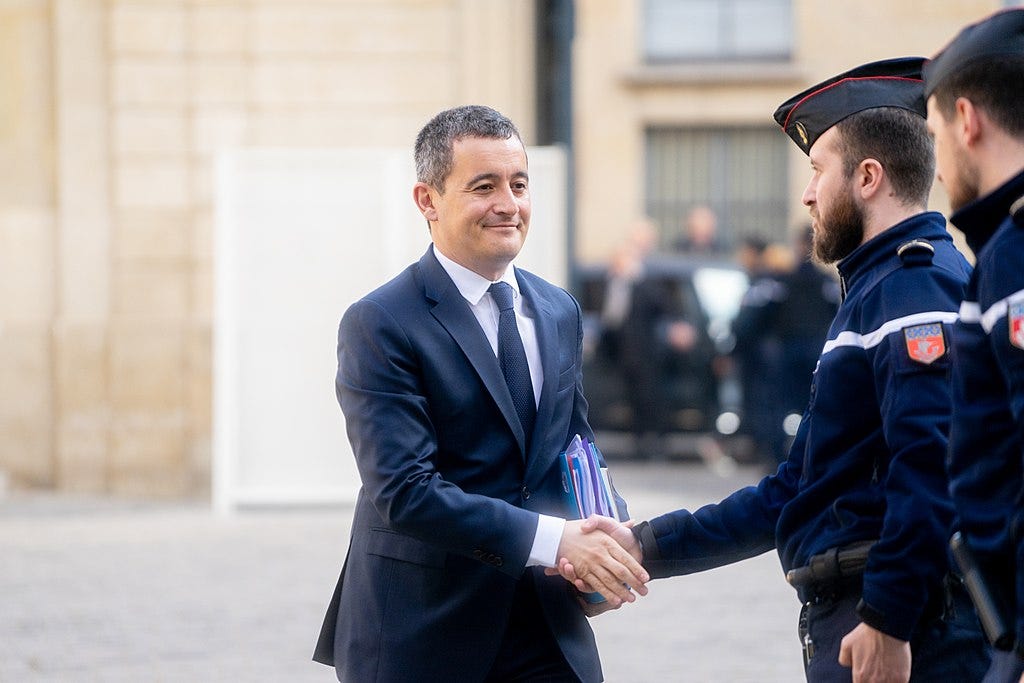
The French Interior Minister may have announced the postponement of the Government's immigration bill until at least the end of the year, but that doesn't mean national security, citizenship, French identities, national values, and diversity won't remain hot topics.
Those issues may make headlines throughout the autumn as the National Assembly and Senate hold a "grand debate" to discuss policy options before a bill is presented.
The bill was originally intended to be up for official discussion in parliament in October.
Interior Minister Gérald Darmanin has said, however, that "two months of consultation are not too many", following a decision by Prime Minister Elisabeth Borne to slow things down.
Is the Government delaying the bill to buy back some time and sort out any messy disagreements through non-parliamentary channels like the "grand debate", instead of risking being caught up in legislative blocks in parliament?
That may be a wise strategy.
Despite cross-party victories on some issues, disagreements in parliament on the recent purchasing power and budget amendment bills have demonstrated the challenges of pushing through legislation without a government majority.
And although immigration is a big issue for many French voters (according to Ipsos, 71% are concerned about its effect on the country), discussions over the policies included in any future bill could be divisive.
So far, Interior Minister Darmanin has mentioned that he wants residence permits [cartes de séjour] to be conditional on a French language and national values certificate.
He also wants to make it harder for those with criminal records to come to France, see swifter deportations when asylum requests are rejected, and put in place industry-tied quotas to limit legal migration.
On the right, Bruno Retailleau, Senate leader of the right-wing grouping Les Républicains (LR), has criticised the Government for "immobilism" through its decision to delay the bill.
He has said the Interior Minister "will have to do better than cosmetic reform" on immigration.
The far-right Rassemblement national (RN) is likely to be displeased, given stronger controls on immigration have been central to its recent manifestos.
(As an aside, it is interesting that key figures from RN like current leader Marine Le Pen and interim leader Jordan Bardella have remained quiet on the bill. Is this because making too much of a fuss would contradict the party's possible strategy of silence as discussed in last week's newsletter?)
It will, however, be interesting to see how much RN and LR end up backing the government on an amended future bill, given the centrality of immigration to their recent manifestos.
Retailleau, a key figure from LR, appears to hope for quotas on legal migrants, a review of the way French citizenship is currently granted by country of birth (instead of by a family link) and a solution to the time taken by the French justice system to penalise illegal migrants.
As an indication of how others in LR may be feeling, the party's candidate in May's presidential election, Valérie Pécresse, vowed to process asylum requests abroad instead of in France, re-evaluate how French citizenship is determined, reduce social security eligibility for asylum seekers and put in place legal migration quotas.
RN's Marine Le Pen also looked for a "national preference" for French citizens over migrants when it comes to social security in this year's presidential elections, vowed to deport foreigners that haven't worked in France for a year and send away migrants that have had criminal convictions. The party has also signalled a desire to review how French citizenship is granted.
RN's 89 seats and LR's 61 seats in the Assemblée nationale, the country's lower house, are not insignificant and could change the government's direction on key issues.
The left may have different opinions, though.
The Parti socialiste, for example, was vocal in its opposition to measures in the 2018 bill on immigration and asylum.
Whilst noting the broader need to combat illegal immigration, the manifesto of socialist presidential election hopeful Anne Hidalgo didn't include many of the proposals mentioned by LR and RN.
Additionally, Jean-Luc Mélenchon, who is head of the left-wing alliance Nupes and leader of the radical left party La France Insoumise, campaigned for the presidency on promises to extend the residency permit period to 10 years and improve access to visas whilst regulating the numbers of workers, students and the parents of children in full-time education coming to France.
With such wide-ranging policy options in a fragmented parliament, discussions of the bill could be intense.
In that light, the "grand debate" and extended consultation period could buy the government time.
It may signal a Government attempt to move the most heated discussions away from parliament, and into the media and consultation periods.
Perhaps headlines on related subjects will keep appearing in French media to prime politicians and the public on the key pressure points of any immigration bill.
One such example is the discussion around the imam Hassan Iquioussen.
Earlier this month, Darmanin said he would deport "by force" the imam, who has Moroccan citizenship but has lived in France for his whole life. Iquioussen was accused of antisemitism, hate and discrimination with the Interior Minister arguing the figure has "no place" in France.
A Paris court stopped Darmanin, though, on the grounds the move infringed the imam's right to a "private and family life".
Then there was the news of governing majority MP Sacha Houlié's motion to give all French residents from abroad the right to vote in municipal elections.
It was criticised by Darmanin, the right and RN.
Currently only EU citizens can vote. The issue had indeed been discussed by former presidents Mitterrand and Hollande, but had never been brought forward.
Coming from a member of the majority, it just goes to show how explosive issues of citizenship and diversity could be for the government itself.
Furthermore, the discussion surrounding the legality of burkinis has flared up once more.
The green Mayor of Grenoble, Éric Piolle, allowed burkinis to be worn in swimming pools from May.
But the local opposition formally complained just over a week ago for what it sees as a decision that goes against the ruling of the country's Conseil d'État, which ruled recently that it collides with the equality of pool users and the neutrality of public services.
Jordan Bardella, interim leader of the RN, and whom Le Pen hopes will succeed her, said back in May that "obviously a major law is necessary". At the same time, Christian Jacob, former secretary of LR, spoke in support of a motion to ban it in the name of laïcité, France's secularism law.
The immigration bill and parliamentary debates on it may have been put on hold, but the discussion appears set to continue in the media and the government's "grand debate".