
Alsatian scuffle
Alsace may be in France’s periphery, but it is a central component of the national landscape

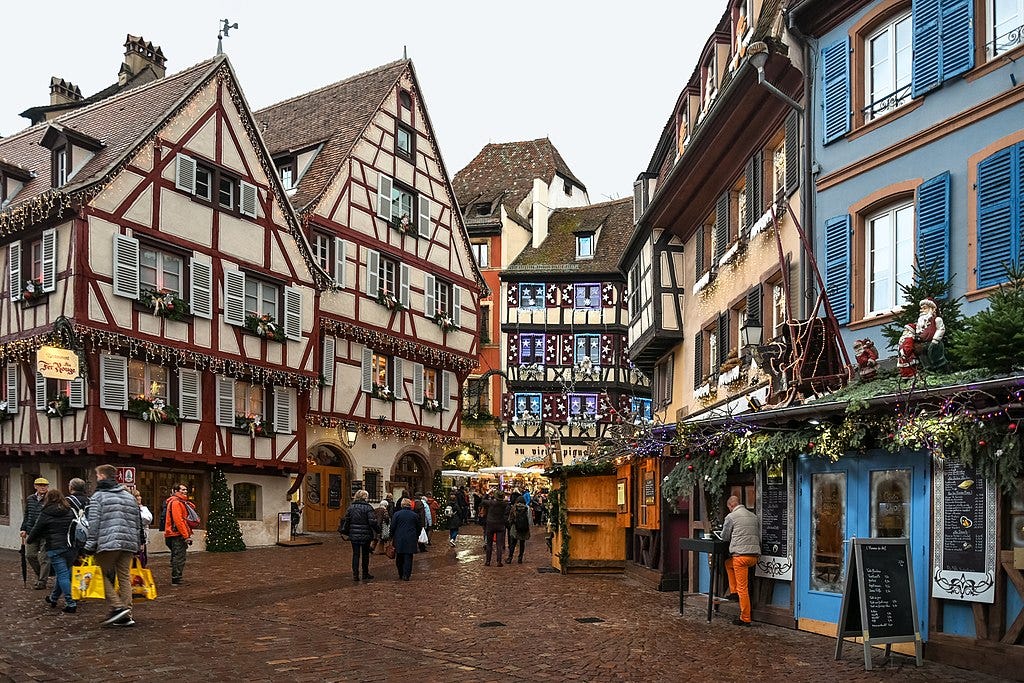
There was an Alsatian scuffle yesterday in France’s lower house.
Canines were nowhere to be seen, however. It involved MPs instead.
Things got personal when Thibault François, a far-right MP from Northern France, described a centrist MP for Northern Alsace, Charles Sitzenstuhl, as a “German ambassador”.
When questioned on the comments, Mr François said he was "obviously making no reference to the MP's origins” and that “my comments were aimed at critiquing the political position of the majority and the subjection of Emmanuel Macron in the context of the Franco-German relationship".
At the receiving end, Mr Sitzenstuhl described the remarks as an "insult to Alsace and it's painful history".
Besides causing upset, Mr François’ comments are bizarre for a couple of reasons.
Whilst Mr François noted the rhetorical aims of his comments, they appear to question the unique kind of francité, or Frenchness, that exists in Alsace.
The Eastern borderland is known for a regional culture that blends French and Germanic influences.
The vast majority of people in Alsace describe any kind of Alsatianness as an additional layer of Frenchness.
Alsatian identity can be a sensitive topic, though - something that Mr François’ misunderstanding of Alsace’s Germanicness may have reinforced.
The region has had a tumultuous history. Between the mid-19th and mid-20th centuries, its borders changed four times.
And whilst many see European integration as the perfect way to express their very Alsatian brand of Frenchness, others - particularly in rural settings where many Alsatian traditions are kept - can be wary of nation-focused political authorities that they see as disrespecting their uniquely Alsatian roots.
As a result, any insinuation that Alsace’s brand of Frenchness be seemingly less French can bring deep anger.
Some still remember the suppression of the Alsatian dialect in schools in the 1950s and 1960s.
Mr François’ comments are also bizarre because some areas of Alsace are known as bastions of the far-right Rassemblement national.
Marine Le Pen came second in the first round of this year’s presidential election in both Alsatian départements, close behind the re-elected president, Emmanuel Macron.
In the 2017 presidential vote, Ms Le Pen came first in the first round in both départements.
Regarding both the Fifth Republic and electoral strategy, the Rassemblement National may think differently when it next raises the peripheral but simultaneously central location of Alsace in France’s national landscape.